

Irurita, gateway to the noble Baztan Valley
Irurita is one of the most notable towns in the Baztan Valley. It is located in the Chartered Community of Navarre, just 55 km from Pamplona, the region’s capital. Situated between Elizondo, Lecároz, Garzáin and Arráyoz, this village has become a historical, cultural, and tourist reference point within the valley.
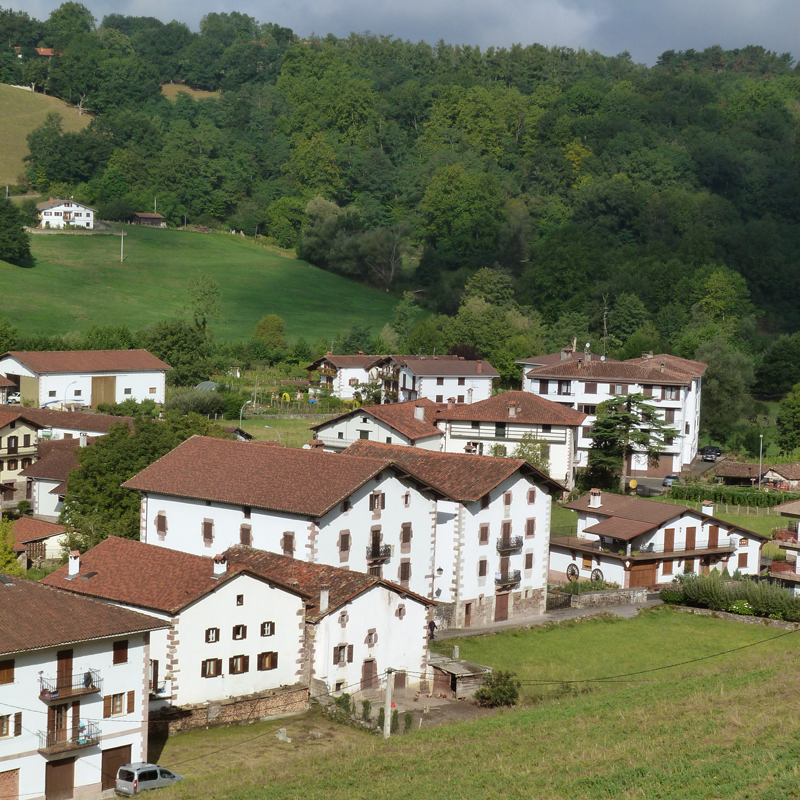
With a population of around 830 inhabitants, Irurita is the second most populated town in the valley. Its altitude of 214 meters and its location in a green setting, among mountains and rivers, give it a special charm for those seeking nature, history, and living traditions.
A village with lively neighborhoods
Irurita is not limited to a single urban center. It is made up of the neighborhoods of Apote, Ordoki and Iperburu, which enrich the town’s identity. These neighborhoods reflect the village’s rural and stately character, with farmhouses, palaces, and architecture typical of the Baztan Valley.
History you can feel in every corner
The history of Irurita goes back to ancient times. In its surroundings, prehistoric dolmens and menhirs are preserved, showing the antiquity of human occupation in the area. These megalithic remains, such as the dolmens of Argibel or the menhirs of Peña de los Generales, make the village an ideal place for lovers of archaeology and history.
WHAT TO SEE IN IRURITA
| Place | Why it’s worth visiting | Practical info / tip |
|---|---|---|
| Plaza de la Duquesa de Goyeneche Center | Social heart of Irurita. Harmonious ensemble of popular and stately architecture with coats of arms and wooden balconies. | Ideal to start the walking route. Early in the day there is good light for facade photos. |
| Jauregia Palace (Casa Torre / Jauregizuria) Gothic + Baroque | Medieval tower (14th c.) integrated into an 18th-century palace. Emblem of the Baztan lineage and local nobility. | Garden with a bar open to the public in season. Notice the contrast between the defensive tower and the Baroque body. |
| Gastón de Iriarte Palace (Etxeberria) 18th c. | Typical 18th-century towered palace with two towers and a Rococo coat of arms. “Víctor” dedicated to Lieutenant General Miguel J. Gastón. | Look at the heraldic stones and the symmetry of the facade. Best view from the corner of the square. |
| Goyeneche Palace (Indacoechea) Heraldry | Facade with coats of arms and two “víctores” (1817) for José Manuel and José Sebastián de Goyeneche, key figures in Spain and Peru. | Excellent example of transatlantic connections in the valley. Perfect for a detail photo of the coats of arms. |
| Dorrea Tower (Jauregizarra) 15th c. | One of the twelve oldest houses in the Kingdom of Navarre. Powerful fortress-like appearance with an exterior staircase. | It is on the outskirts; easy access on foot from the center. Best light in the afternoon. |
| Parish Church of the Savior Baroque | Temple (1739) with a Baroque main altarpiece and a Romantic organ (1900) by Amezua. Curiosity: the 34 facade pipes are decorative. | Respect worship hours. Observe the altarpiece and the side altarpieces (Our Lady of the Rosary, Saint Joachim and Saint Anne). |
| Santa Bárbara Hermitage Tradition | Small rural chapel in a natural setting. Evokes pilgrimages and the valley’s spirituality. | A good stop on short walks. Wear comfortable shoes; access is by path. |
| Medieval bridge over the Bidasoa Photogenic | Single-arch bridge, simple and sturdy. Classic postcard view of Irurita by the river. | Avoid midday sun to prevent harsh reflections. Sunrise or sunset is best. |
| Rebote square (laxoa) Pelota | Birthplace of laxoa and rebote (1898). A living pelota tradition; training ground for pelotaris and remonte players. | If there is a match, stop for a while: it’s live culture. Ask local shops for schedules. |
| Traditional forge Ethnography | Last example in the valley. Small building with a porch where livestock was shod until a few decades ago. | Respect the surroundings. Interesting for explaining old trades to children. |
| Megalithic monuments Prehistory | Dolmens of Argibel, Luurzu rock, Luurzu-Argintzo burial mounds, and menhirs of Argintzu and Luurzu (Peña de los Generales). | Access varies; check before going. Do not move stones or leave any trace. |
| Artesiaga Pass Viewpoints | Scenic forest road. Beech woods, streams, and wide views of the valley; connection toward Esteribar and Ulzama. | Narrow road: drive carefully. Bring a jacket; it gets cooler up top. |
| Mount Saioa (1,418 m) Hiking | Highest peak in the area. Easy ascent from Artesiaga. Views over Baztan, Esteribar and Ulzama. | Changeable weather. Mountain shoes and water. Check forecasts. |
| Neighborhoods of Apote, Ordoki and Iperburu Rural | Extend Irurita’s stately and rural character: farmhouses, barns and traditional paths. | Peaceful walking route to see architecture and landscape without crowds. |
But Irurita’s true character is defined by its nobility and historical lineages. Since the Middle Ages, numerous influential families built palaces and heraldic houses here, which are still preserved today and form part of the urban landscape. This architectural legacy gives visitors the feeling of traveling back in time while walking through its streets.
The square, heart of Irurita
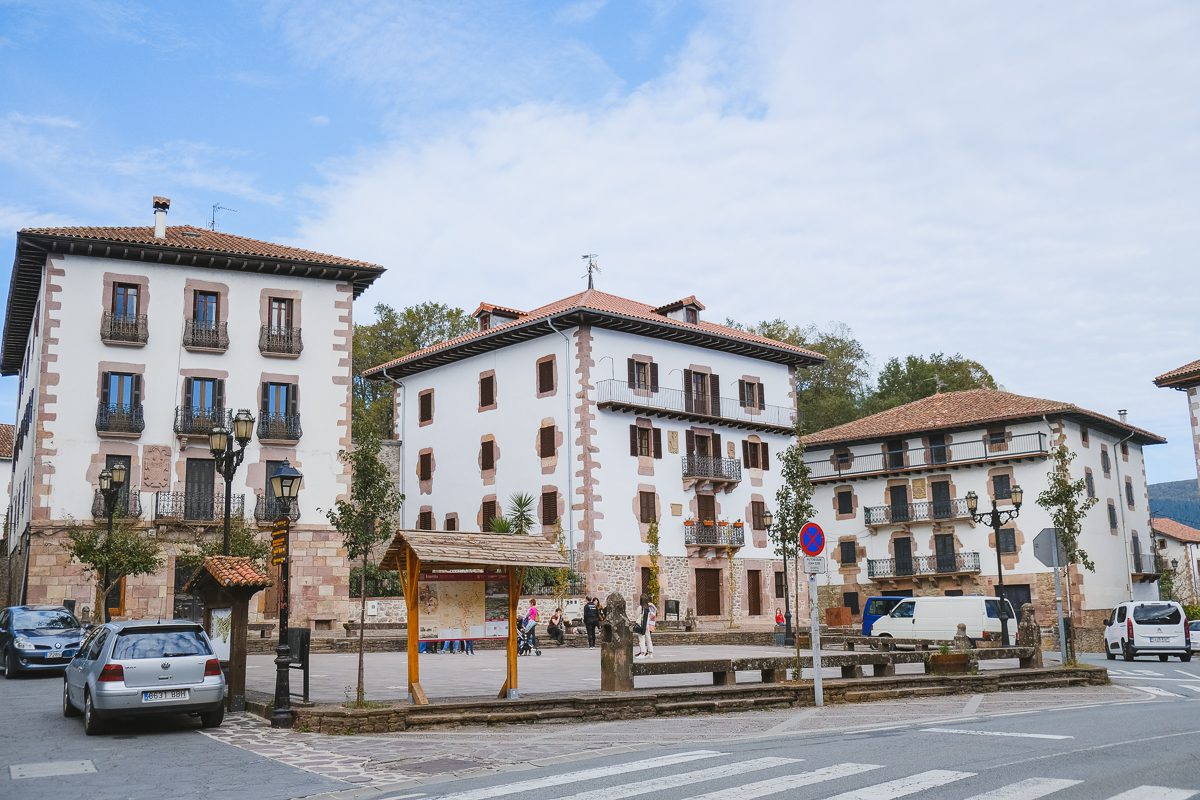
The center of village life is the Plaza de la Duquesa de Goyeneche. Surrounded by emblematic buildings, the square combines popular and stately architecture, offering examples of Gothic and Baroque styles. It is also where events, festivals, and gatherings between residents and visitors take place.
Irurita in the Baztan Valley
Visiting Irurita is also an opportunity to discover the Baztan Valley in all its essence. The village is strategically located for touring other places such as Amaiur, Arizkun or Ziga. In this way, Irurita becomes an ideal starting point for exploring both the history and the nature surrounding this Navarrese valley.
A destination that blends tradition and modernity
Although the weight of tradition is evident in Irurita, there is also a modern atmosphere. Craft workshops, small businesses and tourist services have developed in recent years, ensuring a promising future for the town without losing its rural identity.
Irurita is, in short, a place where historical richness meets the natural beauty of the Baztan Valley, inviting you to stroll, discover and enjoy every corner.
Irurita, gateway to the noble Baztan Valley
Irurita is one of the most notable towns in the Baztan Valley. It is located in the Chartered Community of Navarre, just 55 km from Pamplona, the region’s capital. Situated between Elizondo, Lecároz, Garzáin and Arráyoz, this village has become a historical, cultural, and tourist reference point within the valley.
With a population of around 830 inhabitants, Irurita is the second most populated town in the valley. Its altitude of 214 meters and its location in a green setting, among mountains and rivers, give it a special charm for those seeking nature, history, and living traditions.
A village with lively neighborhoods
Irurita is not limited to a single urban center. It is made up of the neighborhoods of Apote, Ordoki and Iperburu, which enrich the town’s identity. These neighborhoods reflect the village’s rural and stately character, with farmhouses, palaces, and architecture typical of the Baztan Valley. From here, nearby routes to places such as Elizondo help to better understand the cultural and architectural continuity of the area.
History you can feel in every corner
The history of Irurita goes back to ancient times. In its surroundings, prehistoric dolmens and menhirs are preserved, showing the antiquity of human occupation in the area. These megalithic remains, such as the dolmens of Argibel or the menhirs of Peña de los Generales, make the village an ideal place for lovers of archaeology and history. If you want to explore more natural heritage, the Señorío de Bertiz Natural Park is very close and perfectly complements a visit to this area.
The square, heart of Irurita
The center of village life is the Plaza de la Duquesa de Goyeneche. Surrounded by emblematic buildings, the square combines popular and stately architecture, offering examples of Gothic and Baroque styles. It is also where events, festivals, and gatherings between residents and visitors take place. Very nearby is the route toward Sunbilla, another corner of the valley that many travelers combine with Irurita for a day trip or an overnight stay.
Irurita in the Baztan Valley
Visiting Irurita is also an opportunity to discover the Baztan Valley in all its essence. The village is strategically located for touring other places such as Amaiur or for easy access to the Essential Guide to the Baztan-Bidasoa Valley, which helps plan routes including nature, history and culture. In this way, Irurita becomes an ideal starting point for exploring both the history and the nature surrounding this Navarrese valley.
A destination that blends tradition and modernity
Although the weight of tradition is evident in Irurita, there is also a modern atmosphere. Craft workshops, small businesses and tourist services have developed in recent years, ensuring a promising future for the town without losing its rural identity. And if you are looking for extra places to visit, don’t forget that places like Santesteban (Doneztebe) offer routes, gastronomy and nature that enrich any itinerary through the valley — you can see what to do in Santesteban Doneztebe for ideas.
Irurita is, in short, a place where historical richness meets the natural beauty of the Baztan Valley, inviting you to stroll, discover and enjoy every corner.

Historical and architectural heritage of Irurita
One of the greatest attractions of Irurita is its impressive ensemble of palaces and heraldic houses. In few places in the Baztan Valley is the mark of the noble lineages that shaped Navarre’s history preserved so intensely. Walking through its streets is like opening a stone book that tells centuries of tradition and power.
The Plaza de la Duquesa de Goyeneche
The heart of the town is the Plaza de la Duquesa de Goyeneche. Here several of the most representative buildings of civil architecture are concentrated. Surrounded by manor houses and palaces, the square preserves the essence of a meeting place. It also connects easily with routes to other nearby villages, such as Santesteban, where rural life blends with the area’s commercial tradition.
Gastón de Iriarte Palace
In the same square stands the Gastón de Iriarte Palace, also known as Etxeberria. It is a clear example of an 18th-century towered palace. Its facade, flanked by two towers, displays a Rococo coat of arms and a commemorative “Víctor” dedicated to Miguel José Gastón de Iriarte, Lieutenant General of the Navy. The influence of this family extended far beyond the valley, and even today their memory is part of Navarre’s cultural heritage.
Jauregia Palace or the Marqués de Casa Torre
Following the road that leads to Elizondo appears the Jauregia Palace, also known as Jauregizuria or the Marqués de Casa Torre. It is a unique architectural complex, where a 14th-century defensive medieval tower merges with an elegant 18th-century Baroque palace. These kinds of buildings are very characteristic of the Baztan Valley, a symbol of the military and economic importance of its lineages. Today, besides being a historical landmark, its garden houses a small bar open to the public, making it a very special place to rest during the visit.
Goyeneche Palace
Another of Irurita’s treasures is the Goyeneche Palace, also known as Indacoechea. Its facade displays several coats of arms and two víctors granted in 1817 to two illustrious sons of the family: José Manuel de Goyeneche, Lieutenant General and Count of Guaqui, and José Sebastián de Goyeneche, Archbishop of Lima. This direct connection with the Viceroyalty of Peru shows how Irurita was the birthplace of key figures in the history of Spain and the Americas.
Dorrea Tower, a medieval symbol
On the outskirts of the village stands Dorrea Tower, also called Jauregizarra. It dates from the 15th century and is one of the twelve oldest houses in the Kingdom of Navarre. Its fortress-like appearance and exterior staircase recall the medieval defensive constructions still preserved in the valley. It is no coincidence that routes toward the Señorío de Bertiz Natural Park also begin here, perfect for combining heritage and nature.
An open-air museum
The density of palaces, manor houses and tower houses in Irurita turns the village into a true open-air museum. Every heraldic facade tells part of the history of the Baztan Valley. And the best part is that all this heritage can be explored on foot, in a peaceful walk that connects architecture, landscape and local life. In fact, many travelers combine this route with getaways to nearby places such as Sunbilla, which also preserves a special charm by the Bidasoa River.
In Irurita, every stone and every coat of arms tells centuries of history. Discovering its architecture means understanding the greatness of the Baztan Valley.
Religious and cultural heritage in Irurita
In addition to its palaces and tower houses, Irurita preserves valuable religious and cultural heritage that reflects the importance of faith and traditions in the Baztan Valley. Its temples, hermitages and ethnographic elements are an essential part of the village’s identity.
The Parish Church of the Savior
The parish church of Saint Savior began to be built in 1739 thanks to funds sent from Peru by Agustín de Gamio, a son of the valley. It is a Latin-cross church with a porch on its south and west facades, as well as an octagonal bell tower that stands out in the landscape. Inside, the 18th-century Baroque main altarpiece is striking, with sculptures of Saint Joseph, Saint John the Baptist, Saint Eutropius and Saint Francis Xavier.
On the Gospel side there is a preserved Rococo altarpiece dedicated to Our Lady of the Rosary, the work of the Italian sculptor Juan Domingo Olivieri, donated by the Goyeneche family. On the Epistle side, another 18th-century altarpiece shows the Virgin seated with her parents, Saint Joachim and Saint Anne. The church was restored in 1917, when its tower and dome were rebuilt. Also of interest is its 1900 Romantic organ, built by Amezua in San Sebastián, with the curiosity that its 34 facade pipes are merely decorative.
Santa Bárbara Hermitage
On the outskirts of the urban center stands the chapel of Santa Bárbara, a place of contemplation surrounded by nature. This small rural temple keeps alive the tradition of the chapels in the Baztan Valley, many of them linked to pilgrimages and popular celebrations. On nearby routes, other travelers take the opportunity to visit unique places such as Amaiur, where a strong bond between history and religiosity can also be felt.
The medieval bridge
The Bidasoa River crosses Irurita, leaving one of its most picturesque sights: the single-arch medieval bridge. Its simple, sturdy construction has stood the test of time and is still used today by locals and visitors alike. This structure is an example of how historic infrastructure was integrated into rural life and continues to retain its value to this day. If you enjoy this kind of spot, it is also worth visiting the Bertiz Lordship Natural Park, where nature blends with remains of traditional architecture.
The forge, the last vestige of a craft
One of the most curious details of Irurita is the old forge preserved in the village. This small single-story building, with a covered porch, was used until a few decades ago to shoe livestock. It is the only example of its kind left in the entire valley, which makes it an ethnographic asset of great interest. As you walk through it, it is easy to imagine what everyday life in the area was like before industrialization. A few kilometers away, towns such as Sunbilla also preserve traces of trades and traditions that are part of the living heritage of Baztan-Bidasoa.
The religious and cultural heritage of Irurita not only enriches the visit to the village, but also helps us understand the spirituality, art, and customs that have shaped the Baztan Valley.

If you travel through the Baztan Valley, don’t miss the underground magic of the Urdax Caves.
Traditions and festivals in Irurita
The soul of Irurita is best understood through its traditions and the way the village celebrates its history. The festivals, Basque pelota, and gastronomy set the rhythm of local life, conveying an identity that remains alive in every generation of the Baztan Valley.
Ascension, the start of summer
The Ascension patron saint festivities are the most anticipated event in Irurita. They are held in spring and have special significance because they are the first in all of Baztan-Bidasoa, making the village the starting point of the festive season. During those days, locals and visitors fill the square and streets with music, dancing, and joy. The excitement of welcoming people from all the nearby villages, from Elizondo to Santesteban, is palpable in the atmosphere.
Ascension is not just a festival. It is also a reunion with the roots, with the custom of gathering in the square, sharing meals, and taking part in the religious and cultural events that complete the program.
Laxoa, a sport with history
Irurita is considered the birthplace of laxoa, one of the oldest forms of Basque pelota. Its rebound court, built in 1898, still hosts matches that attract players and fans from across the region. Under the direction of Father Don Jesús Jaimerena, laxoa, rebote, and joko garbi gained great prestige, and today they are still part of everyday sports life.
The importance of pelota in Irurita makes the village an inexhaustible breeding ground for pelotaris and remontistas. Attending a match in the square is a close-up experience of a tradition that is part of the valley’s cultural identity. For many travelers exploring the Baztan-Bidasoa valley, enjoying a pelota match in Irurita is an unforgettable experience.
Gastronomy and festive gatherings
The festivals of Irurita are also an opportunity to enjoy Navarrese cuisine. There are always popular meals in the square, where talos with chistorra, valley cheese, homemade pacharán, or seasonal dishes are served. All of this is accompanied by traditional music, dantzas, and the characteristic hospitality of the people of Baztan.
The proximity to places such as Sunbilla or Amaiur allows many visitors to expand their festive experience with routes and excursions in the surrounding area. In this way, a visit to Irurita becomes a complete plan, combining tradition, gastronomy, and culture.
In Irurita, the Ascension festivities and the sound of pelota in the square reflect the cheerful, communal spirit of the Baztan Valley.
Natural surroundings and routes from Irurita
The natural surroundings of Irurita are one of its great treasures. Surrounded by mountains, meadows, and forests, this village offers multiple options for lovers of hiking, nature, and active tourism in the Baztan Valley. Its location, between the Bidasoa River and the watershed divide, makes it a strategic point for exploring unique routes.
Artesiaga Pass
One of the most recommended excursions starts from Irurita toward the Artesiaga Pass, located at almost 1,000 meters above sea level. The road that climbs to the pass is an old forest track with great scenic value. Along the way, you cross beech forests, streams, and natural viewpoints that invite you to stop and enjoy the views.
From the summit of Artesiaga, spectacular panoramas of the Baztan Valley and the neighboring valleys can be seen. It is a perfect place for those seeking nature in its purest form, very similar to the tranquility found in the Bertiz Lordship Natural Park.
Climbing Mount Saioa
From Artesiaga begins the route to Mount Saioa, at 1,418 meters above sea level, the highest peak in the area. The ascent is easy and accessible even for inexperienced hikers, as the terrain presents no major difficulties. At the summit, the views open onto three different valleys: Baztan, Esteribar, and Ulzama.
Saioa is one of the most emblematic mountains in Navarre, and its summit is often crowned by mountaineers enjoying the feeling of touching the sky of the Navarre Pyrenees. It is a highly recommended excursion for those staying in the valley and wishing to combine culture and nature in a single trip.
Hiking and walks in Irurita
In addition to the major mountain routes, Irurita offers quieter walks that allow you to discover the rural landscape. The paths between farmhouses, the meadows with livestock, and the small woods are perfect for enjoying on foot or by bicycle. These routes connect easily with nearby villages such as Sunbilla or with marked itineraries that are part of the Baztan-Bidasoa valley.
Nature lovers also find here a privileged place for birdwatching, photography, and rest in an uncrowded environment. The richness of the landscape makes Irurita an ideal starting point for discovering the natural diversity of northern Navarre.
Connection with the surroundings
Irurita’s location allows visitors to combine mountain routes with cultural and gastronomic plans in other villages of the valley. From here, a getaway to Amaiur or Elizondo completes the experience, offering a perfect balance between nature, history, and tradition.
The natural surroundings of Irurita are a gift for those looking to breathe fresh air, walk among mountains, and discover the green beauty of the Baztan Valley.
How to get there and what to visit near Irurita
Traveling to Irurita is very easy. From Pamplona, simply take the N-121-A road toward France. Upon reaching Oronoz, a turnoff leads directly into the heart of the Baztan Valley and, in just a few minutes, you arrive in Irurita. It is also possible to access it from Elizondo, located just three kilometers away, which makes the town a must-stop for those touring the area.
Distances from Irurita to nearby villages
To help organize your visit, here is a table with the approximate distances from Irurita to other towns in the valley and surrounding area:
| Town | Distance from Irurita | Driving time |
|---|---|---|
| Elizondo | 3 km | 5 min |
| Amaiur | 12 km | 15 min |
| Sunbilla | 14 km | 20 min |
| Santesteban | 10 km | 15 min |
| Bertiz Lordship | 6 km | 10 min |
What to visit near Irurita
Irurita’s location allows you to discover some of the most beautiful corners of the Baztan Valley. Just a step away is Elizondo, the cultural and commercial center of the valley. Very close by is also Amaiur, famous for its castle and its mill, a symbol of Navarrese resistance.
Nature lovers enjoy visiting the Bertiz Lordship Natural Park, a protected area with forests and gardens that impress at any time of year. And if you prefer a more rural atmosphere, villages such as Sunbilla or Santesteban show another side of Baztan-Bidasoa, with their cobbled streets, traditions, and good food.
Irurita is not only a destination in itself, but also an excellent starting point for touring the most emblematic villages and landscapes of the Baztan Valley.
A place to stay and discover
If you are planning a visit to the valley, remember that staying at Casa Angiz will allow you to enjoy the tranquility of a rural setting while being close to all these places. From here, every excursion will be a unique experience, combining nature, culture, and tradition.
Casa Angiz, your ideal accommodation in the Baztan Valley
Anyone visiting Irurita quickly discovers that the Baztan Valley deserves to be explored at a leisurely pace. The best way to do so is by staying in a rural house in Navarre that offers tranquility, comfort, and a strategic location. In this sense, Casa Angiz becomes the perfect place for those who want to explore every corner of Baztan-Bidasoa.
It is a tourist apartment in Baztan that combines rural charm with all modern comforts. From its privileged location in Sunbilla, considered by many travelers to be the best rural house in Sunbilla, it is possible to comfortably visit all the nearby villages: Elizondo, Amaiur, Santesteban, Bertiz Lordship, or the routes that connect with the Navarre Pyrenees.
A charming accommodation
Casa Angiz is not just another rural house in the valley. It is a space designed so that the traveler feels at home, with comfortable rooms, a natural setting that invites rest, and the possibility of taking daily excursions without long distances. From here, each morning can begin with a different plan: discovering the palaces of Irurita, strolling through the square of Elizondo, visiting the mill of Amaiur, or getting lost in the forests of Bertiz Lordship.
Advantages of choosing Casa Angiz
- Strategic location in the heart of the Baztan Valley and very close to the Bidasoa Valley.
- Perfect as a rural house in Navarre for families, couples, or groups of friends.
- Direct connection with hiking routes, cultural excursions, and outdoor activities.
- The charm of a tourist apartment in Baztan that combines tradition and comfort.
A perfect starting point
Staying at Casa Angiz means having all of Baztan-Bidasoa within easy reach. Every day you can visit a different village, return to the apartment to rest, and head out again to discover the best of rural Navarre. That is why those looking for a rural house in the Baztan Valley or wanting to enjoy the best rural house in Sunbilla find here an option that combines authenticity, comfort, and proximity to the main tourist attractions.
If you dream of discovering the villages of the Baztan Valley and the charm of the Bidasoa Valley, Casa Angiz is your best choice to enjoy an unforgettable experience in an authentic rural house in Navarre.
Frequently asked questions about Irurita
Where is Irurita located within the Baztan Valley?
What can you see in Irurita in one day?
What is the best time to visit Irurita?
How do you get to Irurita from Pamplona?
Where should you stay to explore Irurita and the Baztan Valley?
Which villages can be visited near Irurita?
Very close by is Elizondo
🌄 Views on another level:
take the train up Larrún
💧 One of the most beautiful spots in Baztan is waiting for you. Here we tell you how to visit the Xorroxin waterfall.


