

Elizondo, the heart of Baztán
Visiting Elizondo means entering the soul of the Baztán Valley, a place where history, traditions, and everyday life intertwine among green mountains and the constant murmur of the Baztán River (or Bidasoa). This town, with just over 3,500 inhabitants, is the administrative, cultural, and commercial capital of the valley, and also the meeting point for the people of Baztán at fairs, markets, and festivals that fill its streets with life.
From the very first walk, Elizondo wins you over with its stately yet welcoming air. Its manor houses with stone coats of arms, its arcades where the history of old markets still echoes, and its cobbled streets invite you to stop, look around, and let yourself be carried away by the calm that characterizes Navarrese villages.
My experience in Elizondo
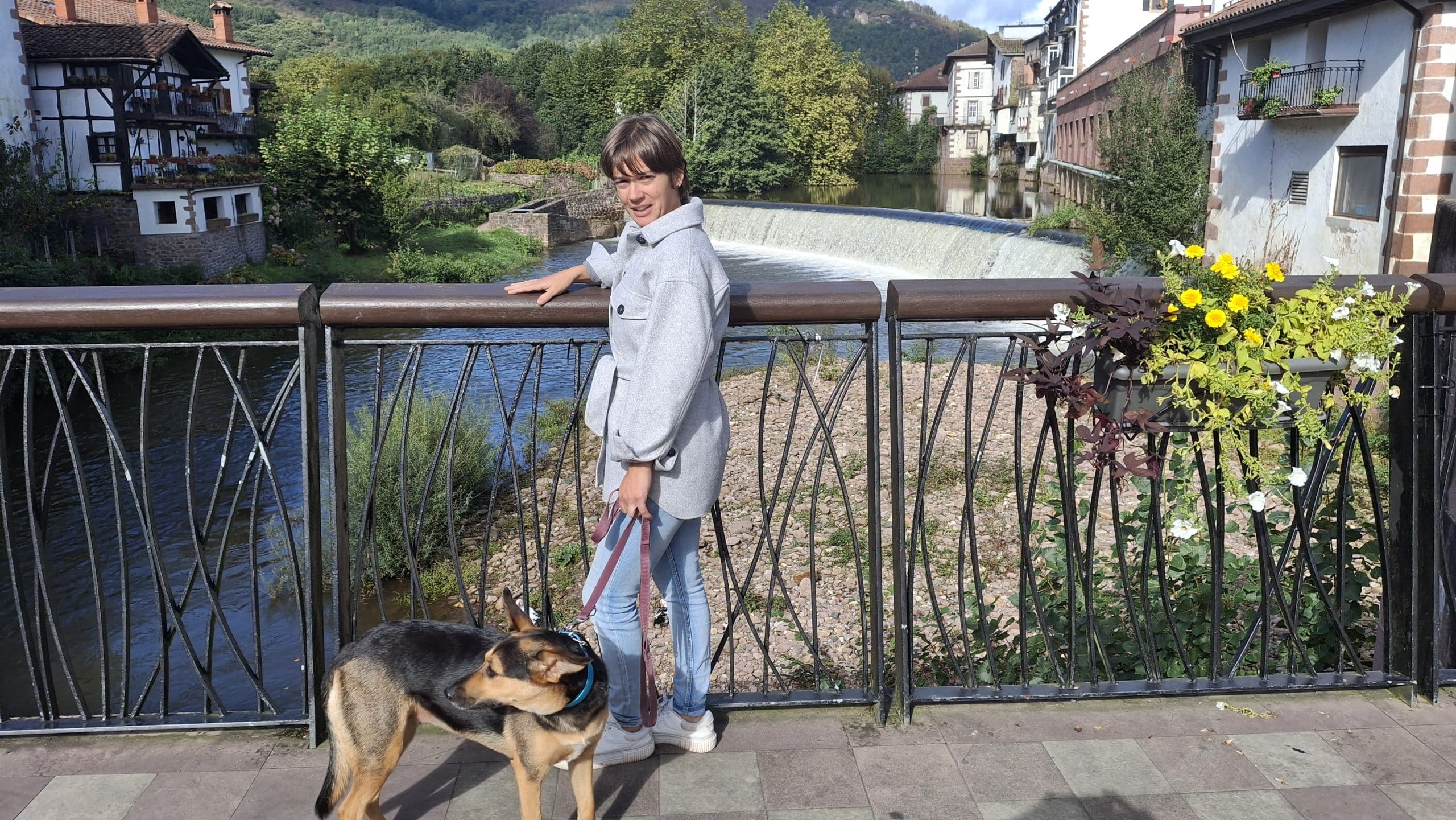
The first time I crossed the Txokoto Bridge and heard the water striking the weir while the reddish façades reflected in the river, I understood why so many people speak fondly of this place. Elizondo is not just a pretty village: it is a place that conveys authenticity. On every corner I discovered a perfect mix between rural and urban: bakeries smelling of Basque cake, lively bars, and neighbors greeting each other as they pass, as if time here moved at a different pace.
A town with history and present-day life
Although it is the most urban of the villages in Baztán, Elizondo preserves the spirit of its traditional neighborhoods —Beartzun, Berro, Etxaide, and Antzanborda— where the essence of rural life is still felt. At the same time, it is a modern center with shops, banks, bars, and restaurants that make it the true engine of the region.
And if anything has put it on the international map, it has been the Baztán Trilogy by Dolores Redondo, which turned it into a literary setting and a destination for thousands of travelers who arrive every year looking for the streets and corners described in the novels.
The guided visit to the Urdax Caves is an essential experience on your route through Navarre.
History of Elizondo – from nobility to the engine of Baztán
A town with noble roots
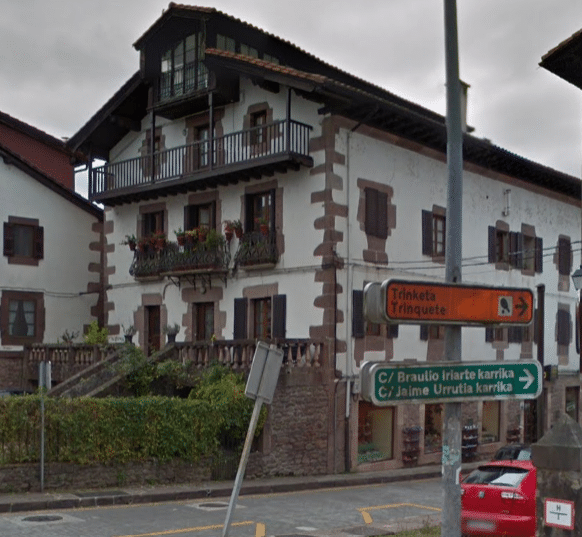
Talking about the history of Elizondo means talking about nobility, palaces, and a village that has always played a leading role in the Baztán Valley. As early as 1397, King Charles III of Navarre recognized the villagers’ nobility, and from then on the manor houses and coats-of-arms palaces became symbols of prestige. Walking along Jaime Urrutia Street, with its façades adorned with stone shields, is like reliving that era when Elizondo shaped the political and social life of the valley.
The Herriko Etxea and the batzarres
The Herriko Etxea (town house) was always the meeting place for the neighbors during the batzarres, those assemblies where key issues for community life were discussed. However, its history was marked by fire: it was burned down three times (1794, 1835, and 1876) and always rebuilt, a reflection of this village’s resilience. Today it remains a symbol of unity among the people of Baztán.
Modernity arrives in Elizondo
In the 19th century, with the construction of the Royal Road and the opening of Santiago Street, Elizondo entered a new stage of development. Curiously, noble families built their houses turning their backs on this new route, as a gesture of rejection toward modernity. But soon, trade, contact with France, and the return of the indianos enriched the village, which experienced unprecedented economic growth.
Later came the Bidasoa railway (1916), connecting Elizondo with Irún and Doneztebe, and consolidating it as the valley’s commercial center.
The 1913 flood
One of the most tragic episodes in Elizondo’s history was the great flood of June 2, 1913, which devastated much of the valley. Amid the mud and destruction, something happened that marked the people of Elizondo: the image of the Sacred Heart from the old church appeared floating in the waters, intact. Since then it has become an object of devotion and a symbol of hope for the whole village.
Elizondo, a pioneer in services
Despite being a small settlement, Elizondo stood out for its innovation. It was the first village in Navarre to have its own public lighting, thanks to a neighborhood collection and community work (auzolan). This spirit of cooperation and progress defines Elizondo to this day, making it a town that combines tradition and modernity like few others.
Before your trip, take a look at this gastronomic guide to the Baztán Valley. It will make your mouth water!
Discover it here.
Elizondo and the Baztán River – Txokoto Bridge, weir, and riverside walks
The river that gives life to Elizondo
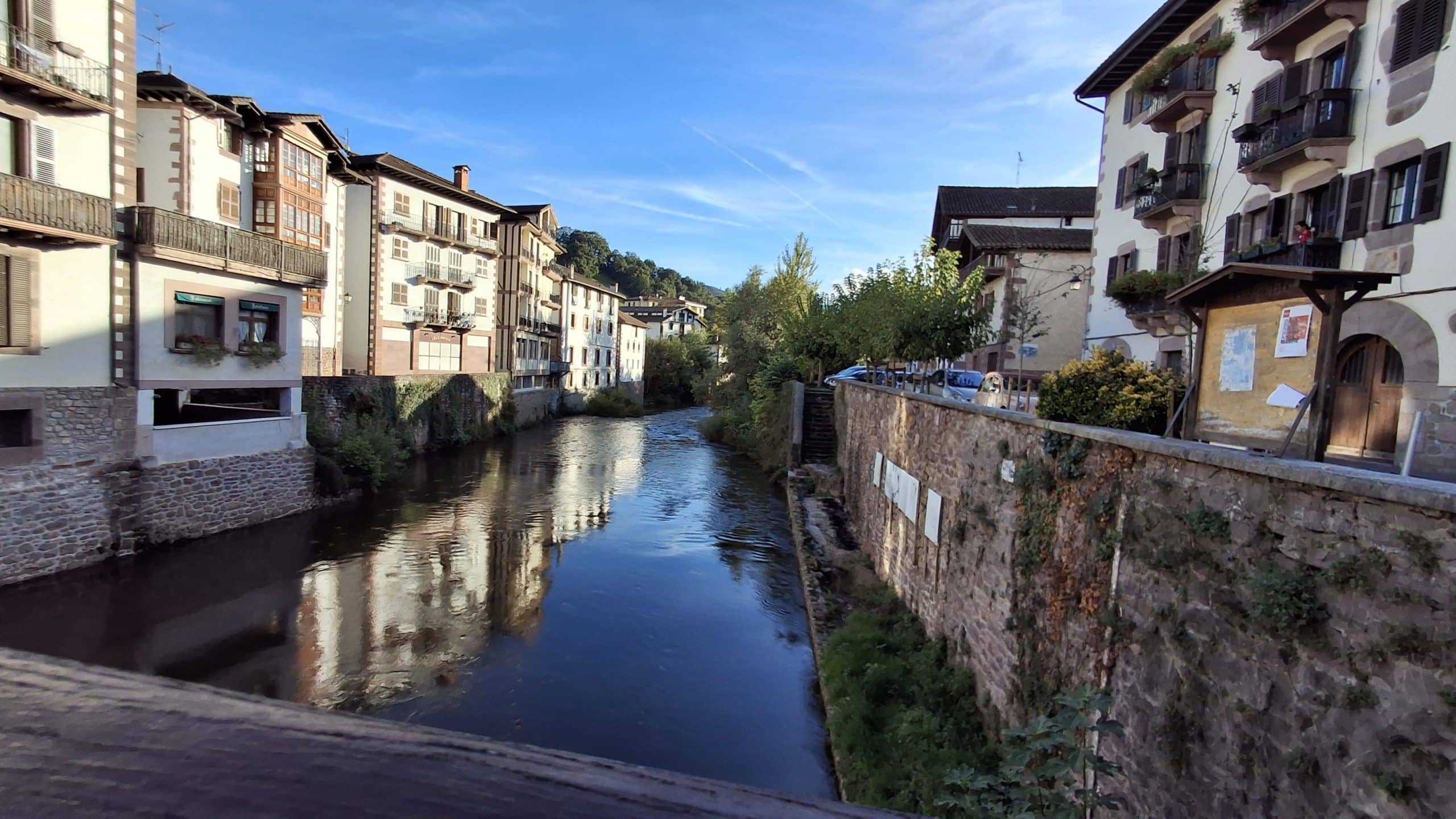
Elizondo cannot be understood without the Baztán River (or Bidasoa in its middle course), which crosses the village and gives it a unique character. Walking along its banks is a way to discover charming corners: traditional stone houses with wooden balconies that seem to float above the water, reflections that change with the daylight, and the river’s constant murmur accompanying every step.
Txokoto Bridge: an essential postcard
One of the most photographed and beloved places by locals and visitors is the Txokoto Bridge, also known as the Muniartea or Antxitonea Bridge. Its stone arch, the waterfall of the weir, and the reddish façades lined up along the riverbed create the most iconic image of Elizondo.
The first time I crossed it, I was hypnotized by the force of the water and the contrast with the village’s calm. It is no coincidence that this corner has become the cover of so many postcards and even a literary setting in the Baztán Trilogy.
Walks and viewpoints by the river
Beyond the bridge itself, there are several spots that offer spectacular views. From Braulio Iriarte Street, you can access a small path that descends to the riverbank, where the sounds of the river are heard more clearly and the freshness of the vegetation is felt. From Jaime Urrutia Street, in the opposite direction, there are also access points that let you admire the classic postcard view with the towers of Santiago Church peeking above the manor houses.
Water as a historical engine
The river not only beautifies the landscape: for centuries it was an economic engine. Mills and small hydroelectric plants operated here, and remains are still preserved that remind us how water powered the life of the valley.
The route through the prettiest villages of Baztan includes Irurita.
Charming streets and architectural heritage of Elizondo
Historic streets that tell stories
Walking through the streets of Elizondo is like going through an open book of history and tradition. The town center preserves corners that still breathe nobility, memory, and everyday life. Every stone, every carved shield, and every wooden balcony holds a piece of the identity of the Baztán Valley.
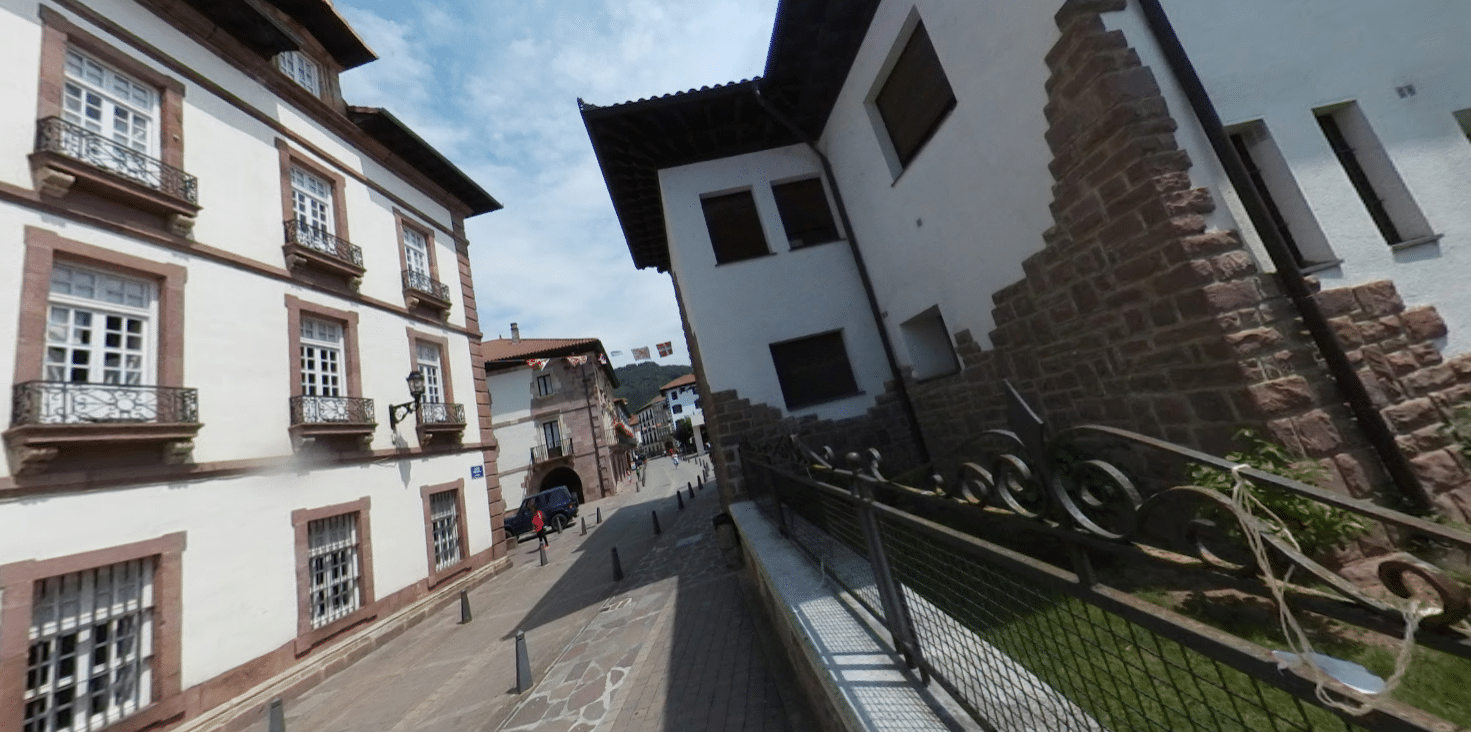
The Jaime Urrutia Street, formerly known as the “lower street,” was the seed of the town. The first manor houses were built here, many of them decorated with impressive noble coats of arms that recall the nobility granted to the people of Elizondo in 1397. Walking down this street means pausing at monumental doorways and façades that seem to transport you to another era.
On the other hand, Braulio Iriarte Street, formerly the “Sun Street” or Eguzkialde, runs along the river and offers some of the best views of the houses reflected in the water. Here you can see how the urban and the natural intertwine in an unforgettable postcard.
Plaza de los Fueros: the social heart of Elizondo
Right in the center opens the Plaza de los Fueros, presided over by the imposing 17th-century Baroque Town Hall, which is also the seat of the General Assembly of the Baztán Valley. This space has always been a meeting point for the neighbors, a place for fairs, dances, and celebrations, and today it still beats with everyday life in its bars and terraces.
Sitting here in the late afternoon, having a coffee or a pintxo while hearing conversations in Basque and the ringing of the bells, is an authentic experience that connects you with the essence of the village.
Santiago Church: a symbol of faith and resilience
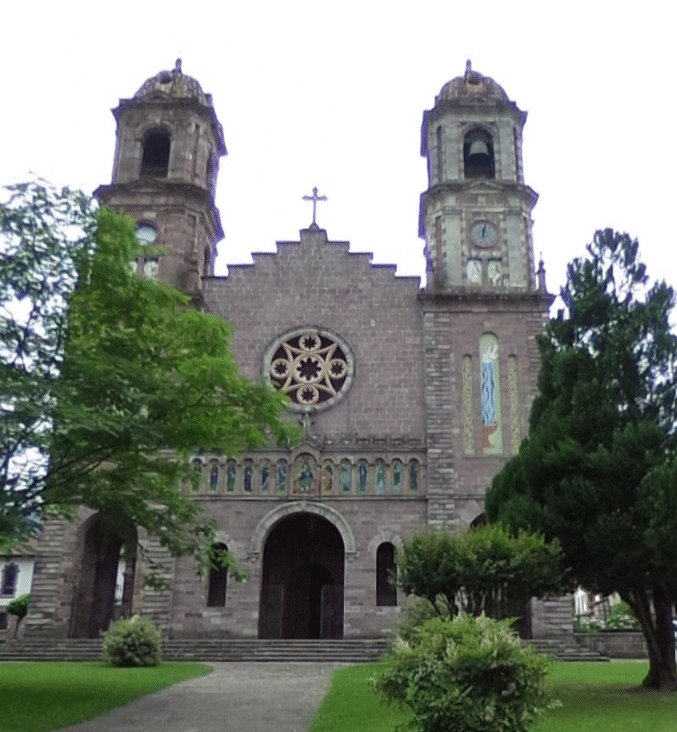
A few steps from the square stands Santiago Church, built between 1916 and 1925 after the tragic 1913 flood that destroyed the old church. Its reddish stone façade and two twin towers dominate the urban landscape, although only one of them preserves the original structure, with the clock beneath the bell tower.
Its interior surprises with its spaciousness and sobriety, and holds unique details such as the choir railing, carved from a single piece of wood, showing the greatness of the tree it came from. In addition, the Sacred Heart that appeared floating intact after the floods is venerated inside, an object of special devotion for the people of Elizondo.
Palaces and stately manor houses
Elizondo is also land of palaces. Among them stands out the Arizkunenea Palace, in Baroque style, also known as the House of the Count or Palace of the Governesses. Now converted into a Cultural Center, it remains one of the most majestic buildings in the town.
No less relevant are other palaces such as Istekonea or the Viceroy’s House, Beramundea, or Datue on the outskirts. These manor houses, built between the 16th and 18th centuries, reflect the prosperity of the valley and the power of its most influential families.
An architecture that blends tradition and modernity
What impressed me most on my walks through Elizondo was the ability to combine the grandeur of the palaces with the simplicity of the popular houses. Balconies full of flowers, arcades that provide shade in summer, and hidden corners where time seems to have stopped. It is this mix that makes getting lost in its streets one of the best experiences you can have in the village.
Hiking routes and nature activities from Elizondo
Elizondo, a starting point for exploring the Baztán Valley
One of the great advantages of staying in Elizondo is that it is located in the heart of the Baztán Valley, making it a strategic place to explore the region on foot or by bicycle. From the village itself, easy routes for all audiences depart, but also more demanding itineraries for those seeking adventure and mountains.
Txokoto Bridge and Baztán River route
A short and accessible walk that follows the riverbanks and lets you enjoy the best views of Elizondo’s historic center. Perfect for families and travelers who want to discover the village at a leisurely pace, camera in hand.
Trail to Xorroxin Waterfall
Very close to Elizondo is one of the most spectacular natural gems of Baztán: the Xorroxin Waterfall. The route crosses oak and fern forests, conveying a sense of peace and freshness that is hard to forget. Hearing the water fall forcefully through the vegetation is an experience that reconnects you with nature.
Climb to Mount Gorramendi and Pyrenean panoramas
For those seeking a more demanding hike, the ascent to Mount Gorramendi offers impressive panoramic views of the Navarrese Pyrenees and, on clear days, even the Basque-French coast. A route full of history, as the summit holds remains of old military installations.
Cycling routes: the Bidasoa Greenway
The old route of the Tren Txikito, which connected Elizondo with France, has been transformed into the Bidasoa Greenway, an ideal route for bicycles and family walks. It crosses tunnels, bridges, and rural landscapes that show the essence of the valley. It is one of the most recommended experiences for those staying in Elizondo.
Connection with the Baztanés Way of St. James
Elizondo is also an important stage on the Baztanés Way of St. James, the Jacobean route that links Bayonne with Pamplona. This stretch offers a less crowded route than the French Way, but equally rich in history, culture, and landscapes that invite reflection.
Additional activities
Birdwatching and local wildlife: the valley is home to birds of prey, roe deer, and other species.
Rural sports and fronton: watching or taking part in a Basque pelota match at Elizondo’s fronton is a unique way to connect with tradition.
Cultural experiences: from livestock fairs to traditional festivals that fill the streets with music, dances, and gastronomy.
If you are looking for history and tradition, don’t miss our guide to what to see in Amaiur, Navarre.
Santiago Church, a symbol of Elizondo
A temple reborn after tragedy
The Santiago Church of Elizondo is one of the most representative monuments of the Baztán Valley and an essential stop for any visitor. The current temple was built between 1916 and 1925, after the devastating 1913 flood destroyed the original church located next to Plaza de los Fueros.
A much-remembered episode among the people of Elizondo was the discovery, intact and floating on the waters, of the carving of the Sacred Heart, which since then became a symbol of faith and hope for the community.
An imposing reddish-stone façade
The church stands out for its reddish ashlar façade, typical of Baztan architecture, framed by gardens that add serenity. The large central rose window and the decorative mosaics above the main entrance are elements that immediately capture visitors’ attention.
The two twin towers rise majestically, although only one preserves the original tower. In the right bell tower, you can still see the historic clock, one of the few remains that survived the 1913 disaster.
An interior full of details
Inside, the spaciousness and the light coming through the stained glass windows are striking, and above all the choir railing, carved from a single piece of wood, an exceptional work that speaks of the skill of the craftsmen of the time. Among the religious images, the figure of Saint James the Apostle, patron saint of the temple and spiritual reference of the village, stands out.
A reference in cultural and social life
Beyond its architectural and artistic value, the Santiago Church of Elizondo remains today a key space in local life: masses, processions, festivities, and community events that unite generations of people from Baztán are celebrated here.
Visiting it is not only about discovering a monumental building, but also about entering the living history of a village marked by the force of the river and the resilience of its inhabitants.
🔗 If you want more official information, you can visit the page of the Baztan Town Hall – Parish of Santiago of Elizondo.
Gastronomy and fairs in Elizondo
The flavor of the Baztán Valley in every dish
Talking about Elizondo also means talking about its rich gastronomy, a reflection of Navarrese tradition, local produce, and the care taken to keep the old recipes alive. Walking through its streets and sitting in any of its bars, taverns, or restaurants is a pleasure for the senses.
Typical dishes you can’t miss
Baztán veal: considered one of the best meats in Navarre, a star in stews, grills, and roasts.
Bidasoa trout: fresh and tasty, usually prepared fried with ham or in the Navarrese style.
Baztán cheese: made by hand in the valley’s farmhouses, it is perfect with a good local wine or cider.
Txantxigorri: the area’s most famous sweet, a bread cake with lard and sugar that you will find in any bakery in Elizondo.
Basque cake: filled with cream or jam, it is another must for those with a sweet tooth.
Gastronomic and livestock fairs
Elizondo is not only enjoyed at the table, but also at its traditional fairs, which combine culture, local produce, and a unique festive atmosphere:
Elizondo Spring Fair 🌸: held between April and May, it brings together local producers of cheese, cured meats, honey, and crafts.
Autumn Fair 🍂: a much-anticipated event that fills the streets with a rural atmosphere, tastings, craft market, and livestock contests.
National Competition-Auction of Select Pyrenean Cattle 🐂: here not only are cattle auctioned, but gastronomic days are also held where Pyrenean veal is the star.
Charming bars and taverns
Elizondo has traditional taverns and pintxos bars, where authenticity can be felt. Notable places include:
Txokoto Tavern, next to the bridge of the same name, perfect for pintxos with river views.
Intza Tavern, under the arcades of Jaime Urrutia Street, with a counter full of irresistible options.
Sweets with history
Besides txantxigorri, there is an essential stop: the Baztanesa Bakery (Mantecados Salazar), famous for appearing in Dolores Redondo’s Baztán Trilogy 📖. Tasting their sweets here is almost a literary act, as many fans of the novels come here to experience it.
Gastronomy as cultural identity
Elizondo’s cuisine is not just food, it is identity. Every dish connects with life in the valley: livestock farming, farmhouses, the river, and traditions passed down from generation to generation. Sitting down to eat in Elizondo is, in short, a way of savoring Navarre in its purest form.
Elizondo and the Baztán Trilogy
The literature that put Elizondo on the map
Although Elizondo has always been the heart of the Baztán Valley, its international fame came thanks to writer Dolores Redondo and her famous Baztán Trilogy (The Invisible Guardian, The Legacy of the Bones, and Offering to the Storm). These mystery novels with touches of Basque mythology have turned the village into a literary destination that attracts thousands of visitors every year.
Walking through Elizondo is like reliving the settings where Inspector Amaia Salazar solved her cases. Every corner described in the pages comes to life, and it is easy to feel the same atmosphere of mystery that surrounds the novels.
Corners of the Trilogy in Elizondo
Txokoto Bridge: an icon of the town and one of the key settings of the first novel.
Baztanesa Bakery (Mantecados Salazar): where the protagonist buys the famous shortbread, a place that has become a must-stop for readers.
Plaza de los Fueros: the center of village life, also described in the trilogy.
Jaime Urrutia Street and Braulio Iriarte Street: settings that convey the essence of the most literary Elizondo.
Guided tours and literary tourism
The success of the books and the films adapted for cinema has boosted a unique literary tourism in Navarre. Today, guided tours of Elizondo are organized that follow the trilogy’s settings, explain the real history behind the legends, and show the most emblematic places.
For fans, these routes are an exciting experience: going from page to reality and discovering how Dolores Redondo managed to capture the essence of a village full of magic and mystery.
My experience in literary Elizondo
As a reader, walking through Elizondo with the novels in mind is overwhelming. Recognizing the sound of the river described in The Invisible Guardian, tasting a sweet in the bakery mentioned in the books, or watching the morning mist over the mountains of Baztán made me understand why Dolores Redondo chose this place. The village has that mix of beauty and mystery that makes it perfect for a story blending crime, mythology, and tradition.

Festivals and traditions of Elizondo 🎉
Elizondo, a village that lives its festivals with passion
If there is something that characterizes Elizondo, it is its strong cultural identity. Although it is the capital of the Baztán Valley, it has not lost the traditions that connect it with its history. Festivals are moments when neighbors and visitors gather to celebrate, dance, taste good food, and keep the essence of the village alive.
Elizondo patron saint festivities
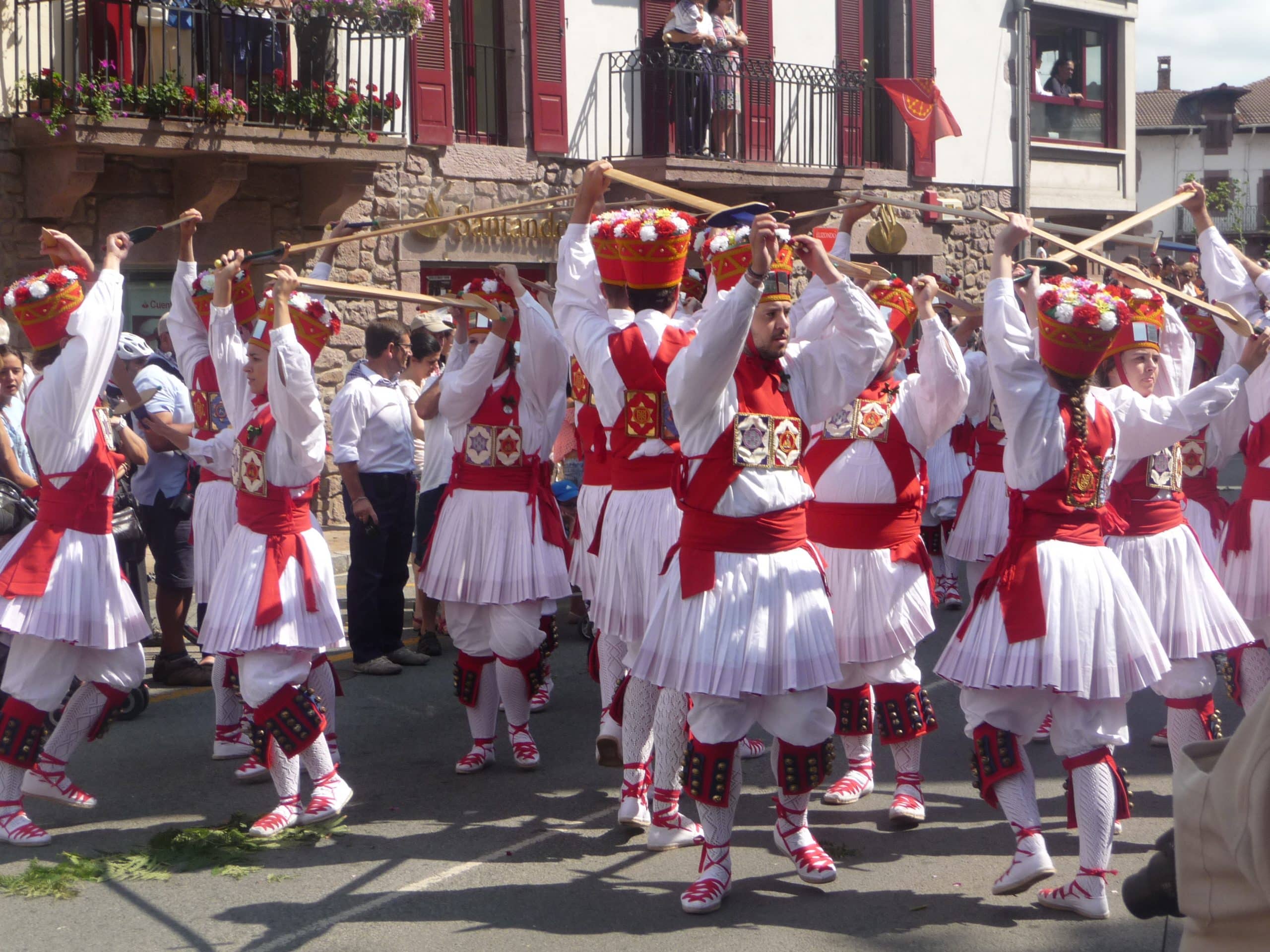
The most important festivities are those held in honor of Saint Peter, at the end of June. For several days, the town fills with music, parades, dances, children’s activities, and sports events such as pelota matches at the fronton. Plaza de los Fueros becomes the epicenter of joy, with concerts and dances that last until dawn.
Inauteriak: traditional carnivals
The Inauteriak or carnivals are celebrated with great intensity in Elizondo. These are dates when creativity, color, and humor flood the streets. Floats, parades, costumes, and troupes liven up the town for an entire weekend, turning it into a festive stage where all generations take part.
Fairs and markets with a rural flavor
Elizondo is also famous for its annual fairs:
Spring Fair 🌸: dedicated to local products, crafts, and gastronomy.
Autumn Fair 🍂: an unmissable event that brings together livestock breeders, producers, and artisans in a festive and authentic atmosphere.
Pyrenean Cattle Contest: where, in addition to the livestock auction, tastings and contests of pintxos and veal broths are held.
These fairs are much more than markets: they are a reflection of the union between agricultural tradition and Elizondo’s social life.
Music, dances, and rural sports
During the festivities, traditional Basque music takes center stage with the dantzaris and the txarangas that tour the streets. Nor is Navarrese rural sport missing: competitions of aizkolaris (axe log cutting), stone lifting, or strength tests that excite locals and tourists.
Religious and popular traditions
In addition to the patron saint celebrations, processions and masses in the Santiago Church mark the most solemn moments. The contrast between the religious and the popular makes Elizondo’s festivities a unique event in Navarre, where all aspects of community life find their place.
An experience worth living
Attending Elizondo’s festivities means immersing yourself in the authentic culture of Baztán. Personally, I was impressed by the hospitality of the locals: you feel part of the village even when you arrive as a visitor. Dancing in the square, sharing a talo with chistorra, or enjoying a pelota match under the warmth of the crowd is an experience that stays in your memory.
Historic palaces and manor houses of Elizondo 🏛️
The stately legacy of Elizondo
One of the things that most surprises you when walking through Elizondo is the number of palaces and historic manor houses preserved in its streets. This is no coincidence: thanks to the nobility recognized in the 14th century and the prosperity brought by trade, the indianos, and smuggling, Elizondo filled with monumental buildings that are still witnesses to its past splendor today.
Arizkunenea Palace
The most famous is the Arizkunenea Palace, also known as the House of the Count or Palace of the Governesses. Built in the 18th century, it is an imposing Baroque building that today functions as a Cultural Center. Its wrought-iron balconies and noble coat of arms make it one of the most photographed façades in Elizondo.
Istekonea Palace or the Viceroy’s House
Another notable building is the Istekonea Palace, also known as the Viceroy’s House. Its name recalls Juan de Goyeneche, viceroy of New Spain, and reflects the connection many Baztán residents had with America. Its size and elegance speak of the power and wealth of these families.
Beramundea Palace
The Beramundea Palace is another 18th-century Baroque example that still preserves the bearing of the great Baztán lineages. It is located in the town center and is part of Elizondo’s cultural route.
Datue Palace
On the outskirts we find the Datue Palace, a stately building surrounded by nature that shows how powerful families also built more secluded residences, surrounded by farmland and forests.
Indiano houses and popular architecture
In addition to the great palaces, Elizondo is full of indiano houses, built at the end of the 19th century by those who emigrated to America and returned with a fortune. These buildings stand out for their size, gardens, and a modernist air that contrasts with the sobriety of the traditional stone houses.
Alongside them, the traditional houses of Baztán complete the architectural postcard: reddish stone walls, wooden balconies full of flowers, and gabled roofs that blend perfectly with the valley’s green landscape.
An essential architectural walk
Touring the palaces and manor houses of Elizondo is not just about admiring beautiful buildings; it is about understanding how this village became the capital of Baztán and how history, nobility, and the effort of its people were engraved in stone. Personally, getting lost in these streets and stopping at each façade made me feel like I was walking through an open-air museum.
What to see near Elizondo
If you are staying in Elizondo, you are in the perfect location to explore some of the most impressive natural and cultural gems of the Upper Bidasoa and the Baztán Valley. Here are my favorites:
1. Xorroxin Waterfall – Nature in its purest form
Located a few kilometers away, in the Erratzu area, this waterfall is a visual and sound spectacle. Surrounded by beeches, oaks, hazelnuts, and chestnut trees, it offers a circular route of 7.4 km, with only 150 m of elevation gain, perfect for the whole family. It takes about 2 h 15 min, with marked trails and a storybook setting. Valle de BaztánWikipediaWikiloc | Rutas del Mundo
2. Zugarramurdi Caves – Between legends and myths
These caves, known as the Witches’ Caves, are less than half a kilometer from Zugarramurdi and were the setting for witch gatherings and Inquisition trials in the 17th century. Today you can visit both the cave and the adjacent Witches Museum, the heart of the area’s popular history. Zugarramurdi Caves
3. Señorío de Bértiz – A natural garden
Just a few minutes away, this natural park is a haven of peace with botanical gardens, Atlantic forests, viewpoints, and waterfalls. It is ideal for peaceful walks, photography, and connecting with nature. Discover it here: [Señorío de Bértiz]
4. Bidasoa Greenway route – Pedals and fresh air
This old railway line converted into a greenway crosses valley landscapes that you can explore by bike or on foot. A very relaxing and scenic plan to share. More info here: [Bidasoa Greenway]
5. Santesteban (Doneztebe) – Eat, shop, and connect
Just 3 km away, this more urban town offers shops, restaurants, and services that complement the plans in Elizondo and its surroundings very well. Data and suggestions here: [What to see in Santesteban]
6. Baztán Valley – An essential guide
If you want a complete overview of the area, its heritage, routes, and villages, I recommend this friendly and visual guide: [Baztán-Bidasoa Valley: essential guide]
7. Sunbilla – Nature and architecture
Very close to Elizondo, this village on the banks of the Bidasoa holds history, routes, and tranquility. Ideal for completing your trip through the region. Discover it in more depth here: [Sunbilla]
My personal experience
Getting lost among torrents of ferns while watching the water fall in Xorroxin or feeling that mysterious atmosphere in the Zugarramurdi Caves is simply magical. What struck me most was how each place has its own story: the lull of the water, the damp stone, or the stone corridors that still hold echoes of ancient rituals. Elizondo is perfect for combining them all in an unforgettable getaway.
Where to sleep in Elizondo and surroundings 🛏️
The charm of staying in the heart of Baztán
When you visit Elizondo and the Baztán Valley, a few hours’ stroll is not enough. The ideal is to stay at least a couple of nights to enjoy the village’s peaceful atmosphere, explore nearby routes, and experience the local gastronomy without rushing. And for that, nothing is better than staying in a rural house in Navarre, where tradition and comfort go hand in hand.
Rural houses in Elizondo
In Elizondo you will find different options of rural houses and tourist apartments that preserve traditional architecture: reddish stone façades, wooden balconies with flowers, and warm rooms that invite rest. Many of them are managed by local families, which allows you to experience Baztán hospitality firsthand.
Staying at Casa Angiz: nature and comfort
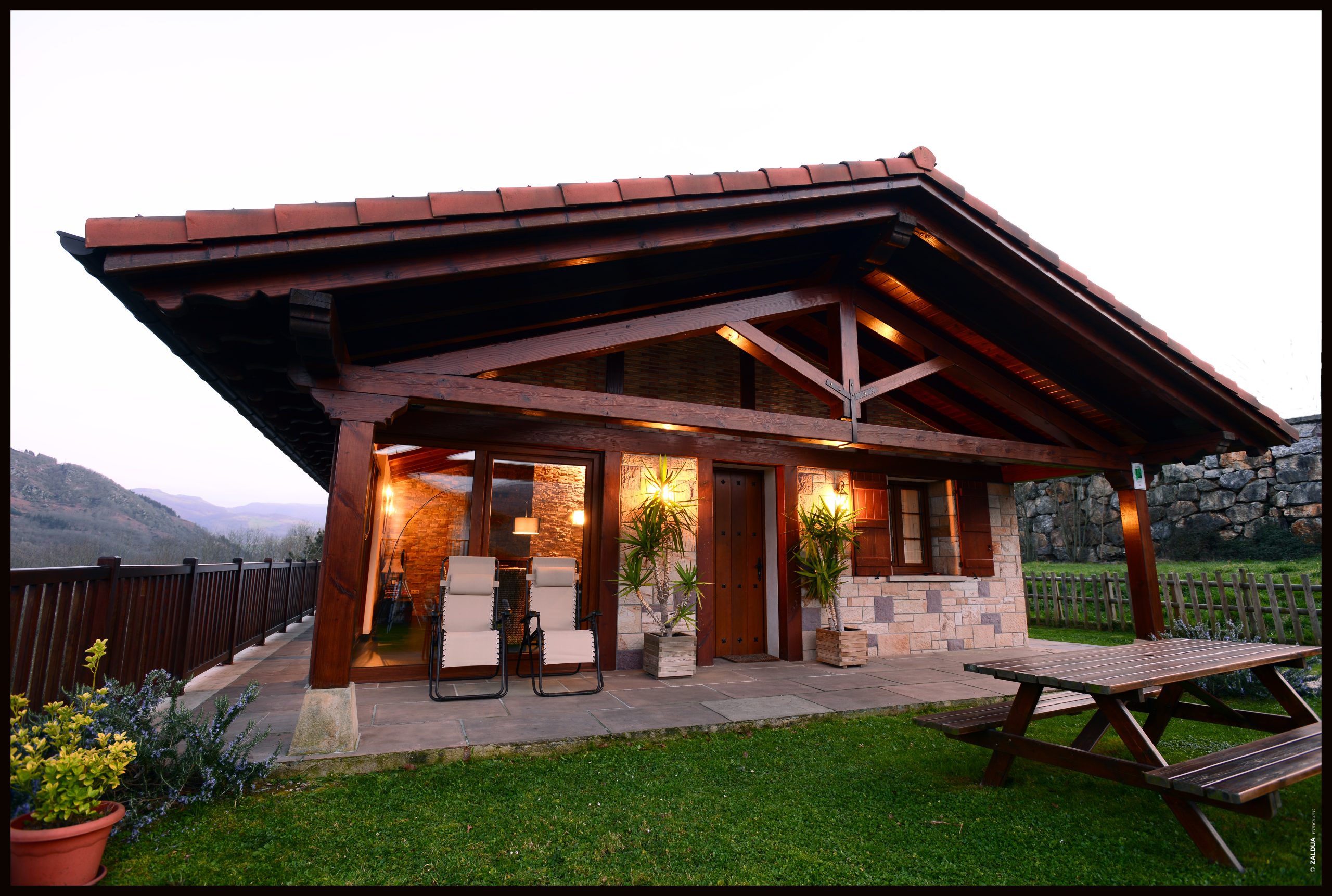
If you are looking for accommodation with personality, surrounded by nature and just minutes from Elizondo, my recommendation is undoubtedly Casa Angiz 🌿.
Located in Sunbilla, just a few kilometers from Elizondo, Casa Angiz combines everything one needs in a rural getaway:
Fully equipped rural apartments for couples, families, or groups.
Privileged natural surroundings, next to the Bidasoa Greenway and very close to the Señorío de Bértiz Natural Park.
Absolute tranquility, ideal for disconnecting from noise and resting.
Close to the main points of interest: in less than 15 minutes by car you can be in Elizondo, Zugarramurdi, Santesteban, or on the best-known routes in the valley.
Staying at Casa Angiz is not just sleeping, it is living a complete rural experience in the heart of Baztán-Bidasoa.
Tips for choosing accommodation in Elizondo
Book in advance during high season (summer and long weekends).
Choose rural houses with good ratings and that fit your group (couples, families, groups of friends).
Consider proximity to routes and activities: many accommodations offer local tourist information that enriches your stay.
Keep in mind that Elizondo is more urban, while nearby villages like Sunbilla offer more calm and contact with nature.
My personal experience
On my last visit, staying near Elizondo allowed me to enjoy the bustle of the village during the day, but at the same time return to the calm of a natural setting at night. That combination of festive atmosphere and tranquility was perfect. And I can assure you that waking up to the sound of the river and the Baztán mountains in the background is something you don’t easily forget.
Rural houses and rural rentals in Elizondo and the Baztán Valley
Elizondo and the Baztán Valley: an ideal destination for rural tourism
Elizondo is the heart of the Baztán Valley, a privileged natural setting where more and more travelers seek authentic rural tourism in Navarre experiences. Sleeping in a rural house in Elizondo or in a rural apartment in the Baztán Valley means enjoying calm, nature, and proximity to routes, mountains, rivers, and charming villages.
The data show it: the search for rural houses in Navarre is booming, and the Baztán Valley has established itself as one of the favorite destinations for those seeking disconnection and authenticity.
Rural houses in Elizondo: tradition and modernity
The rural houses in Elizondo combine the best of tradition and modern comfort. Their reddish stone façades, wooden balconies with flowers, and the warmth of their interiors convey the essence of Baztán. Many of them are located in the historic center, which makes it easy to walk to Plaza de los Fueros, Txokoto Bridge, or Santiago Church.
Here you will find both rural houses for groups and holiday rentals in Elizondo perfect for couples or families who want to spend a few days among mountains and villages full of history.
Rural accommodations in the Baztán Valley
Beyond Elizondo, the whole valley offers a wide variety of rural houses in Navarre. These are accommodations managed by local families that convey hospitality and tradition, and that also serve as a starting point for visiting must-see places such as the Xorroxin Waterfall, the Zugarramurdi Caves, or the Señorío de Bértiz Natural Park.
Staying in the Baztán Valley means having nature, hiking routes, and local gastronomy close at hand, without giving up the comfort of accommodations prepared for today’s traveler.
Casa Angiz: your best option in Baztán-Bidasoa
Among all the options, I want to personally recommend Casa Angiz 🌿, located in Sunbilla, a strategic place in the Baztán-Bidasoa Valley. The best thing about choosing Casa Angiz is that:
You are just a few minutes from Elizondo, but in a quieter and more natural environment.
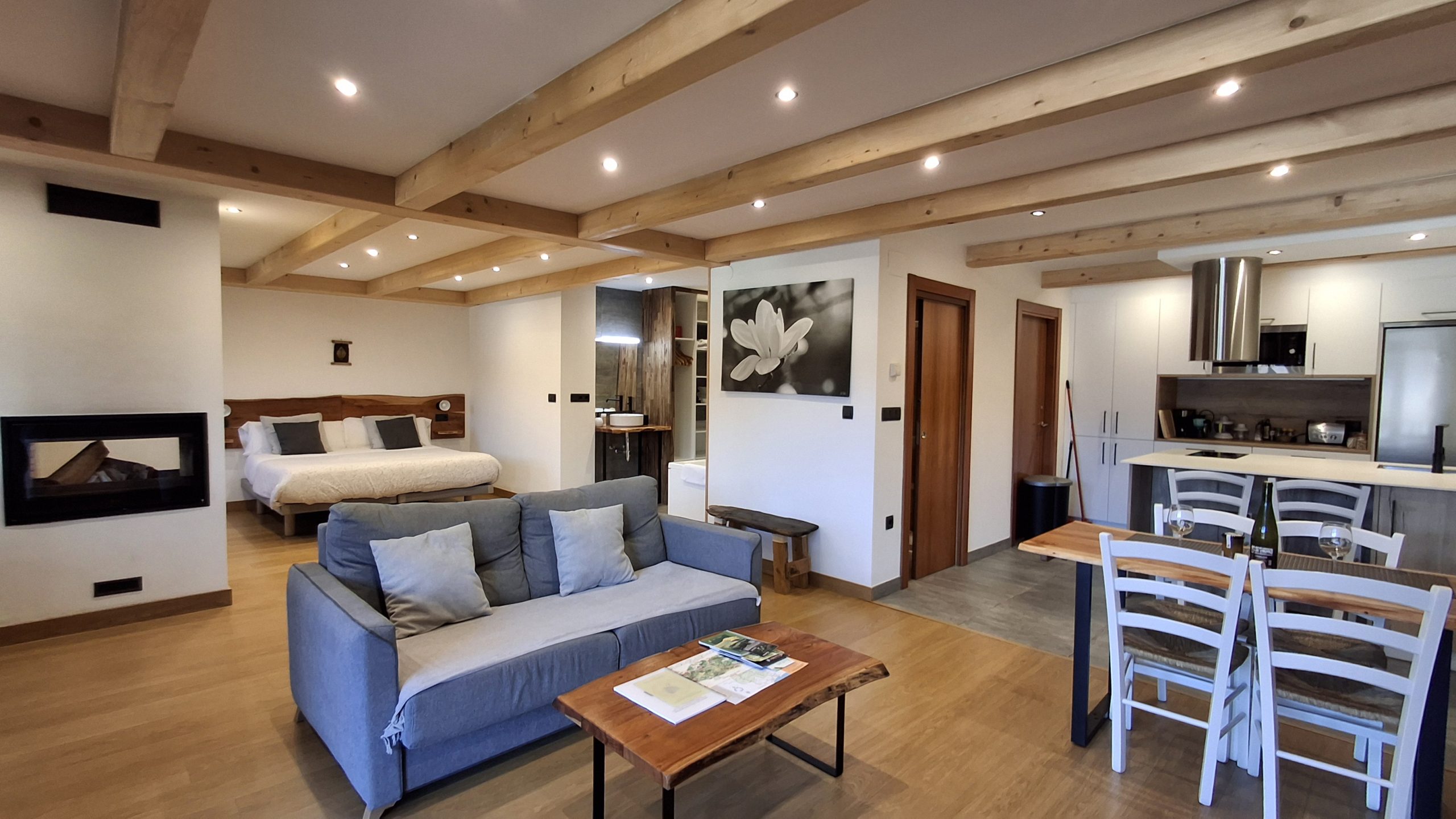
You have fully equipped rural apartments, perfect for couple getaways, families with children, or groups.
From here it is easier to explore the two great natural parks in the area: Señorío de Bértiz and the Bidasoa Greenway.
Its location in Sunbilla lets you enjoy both the Baztán Valley and the connection with the Bidasoa, multiplying the options for routes and excursions.
If you are looking for rural houses in Elizondo or rural rentals in the Baztán Valley, staying at Casa Angiz is a choice that combines the best of both worlds: proximity, comfort, and authenticity.
Holiday rentals in Elizondo and surroundings
In addition to rural houses, rural apartments in the Baztán Valley are becoming increasingly popular as a holiday rental in Elizondo option. This format offers more flexibility, especially for families or groups of friends who want to feel at home, with a fully equipped kitchen and private spaces.
Casa Angiz, with its rural apartments in Navarre, fits perfectly into this trend. It allows you to stay in the middle of nature, enjoy the tranquility of a village like Sunbilla, and at the same time be a step away from Elizondo, Zugarramurdi, or Santesteban.
Elizondo, the heart of the Baztán Valley
Elizondo, much more than a destination
After walking its cobbled streets, getting lost among palaces and stately manor houses, gazing at the river from the Txokoto Bridge, enjoying its gastronomy, and letting yourself be carried away by the stories of the Baztán Trilogy, you understand why Elizondo is considered the soul of the Baztán Valley.
This village is not just a place to visit, it is a destination to be experienced with all five senses:
Sight, with its green mountains and traditional houses.
Hearing, with the murmur of the river and the music of its festivals.
Taste, with the authentic flavors of Navarre.
Touch, with the warmth of the stone and wood that decorate its streets.
Heart, filled with history, culture, and nature.
Starting point for discovering Baztán-Bidasoa
In addition, staying in Elizondo or its surroundings opens the door to a whole world of experiences: hiking, caves, waterfalls, natural parks, and charming villages that make this area a unique place in Navarre.
Your refuge in the valley: Casa Angiz
And if you want your getaway to be perfect, nothing is better than staying at Casa Angiz 🌿. From our rural apartments in Sunbilla, just a few minutes from Elizondo, you will have the ideal location to enjoy the Baztán-Bidasoa Valley with comfort, tranquility, and proximity.
Here you will find an authentic environment, local hospitality, and the rest you need after each day of adventure.
✨ Elizondo is not just visited, it is felt. And the best way to experience it is by staying in a rural house like Casa Angiz, in the middle of nature and with everything you need to disconnect.
🔗 Book your stay now at Casa Angiz and discover why Elizondo is one of the most magical destinations in Navarre.
🚃 Perfect plan for couples or families:
see the Larrun Train guide
What does Elizondo mean in Spanish?
The name Elizondo comes from Basque and means “next to the church” or “at the foot of the church.” The word is made up of eliza (church) and ondo (near). This reflects the central role the parish had in village life for centuries. Elizondo, as the capital of the Baztán Valley, was always organized around its main church, a place for meetings, political decisions, and social life. The etymology of the name is not only linguistic, but historical: it shows how religion and community were united from the founding of the place.
Is Baztán Basque?
Yes, the Baztán Valley is part of the Basque-speaking area of Navarre and has a strong Basque identity. Here Basque is spoken in everyday life, especially among younger generations and in schools. The culture is also deeply Basque: sports such as pelota or aizkolaris, the dances of the dantzaris, and the txarangas are part of daily life. However, the valley has its own character, a mix of Navarre and the Basque Country, with deeply rooted customs such as auzolan (communal work). Elizondo, as the capital, is the best place to feel that unique cultural duality.
What can you see in Elizondo?
Elizondo is full of interesting places: Plaza de los Fueros, Santiago Church, Txokoto Bridge, and Jaime Urrutia and Braulio Iriarte streets, with palaces and Baroque manor houses. You can also visit Arizkunenea Palace, now a Cultural Center. Gastronomy is another attraction: don’t miss txantxigorri, Basque cake, or Baztán veal. In addition, it is the ideal starting point for excursions to Xorroxin Waterfall, Bértiz Natural Park, or the Zugarramurdi Caves. It is a village that combines history, culture, commerce, and nature.
What is the prettiest valley in Navarre?
Navarre has spectacular valleys such as Roncal or Salazar, but the Baztán Valley is considered the prettiest for its diversity of landscapes, villages, and traditions. Its location in Atlantic Navarre gives it a humid, green climate all year round. The valley brings together mountains, beech and oak forests, rivers like the Bidasoa, and villages with reddish stone manor houses. It also preserves a unique culture, a mix of Navarre and the Basque Country, with the Basque language, traditional fairs, and local gastronomy. It is a place that combines nature and culture in a balanced way, making it a special destination.
What is the prettiest village in the Baztán Valley?
Many consider Elizondo the prettiest village in the Baztán Valley because of its size, cultural life, and monuments. However, others have a special charm: Amaiur, with its medieval arch and castle ruins; Ziga, famous for its viewpoint and Baroque church; or Erratzu, with the route to Xorroxin Waterfall. The beauty of the valley lies in the whole, but Elizondo stands out because it combines the best: tradition, gastronomy, commerce, history, and tourism. It is the place that best represents the essence of Baztán.
What ethnicity is Elizondo?
The inhabitants of Elizondo belong to the Basque-Navarrese people. Anthropologically, they share cultural and linguistic traits with the Basque ethnic group, but with particularities of their own from Baztán. For centuries, the valley’s relative isolation allowed customs such as auzolan (community work), rural sports, traditional music with txistus and trikitixas, and a way of life tied to the land to be preserved. Today Elizondo is more open and tourist-oriented, but it keeps its identity alive thanks to the use of Basque, its festivals, and its way of understanding community life, based on closeness among neighbors and tradition.
What river runs through Elizondo?
Elizondo is crossed by the Baztán River, which later takes the name Bidasoa. This river is vital to the valley’s history. In the past it fed mills and gardens, and today it is a tourist and scenic resource. Its waters caused disasters such as the great flood of 1913, which destroyed part of the village and forced the rebuilding of Santiago Church. Walking along the riverbank is one of visitors’ favorite activities, as its wooden-balcony houses reflected in the water form one of the most beautiful images in Navarre.
What was filmed in Elizondo?
Elizondo was the main filming location for the Baztán Trilogy, based on the novels by Dolores Redondo. The Invisible Guardian, The Legacy of the Bones, and Offering to the Storm were filmed here. Iconic places such as Txokoto Bridge, Plaza de los Fueros, and Baztanesa Bakery became fictional settings. The 2018 shoot was historic because it was the first time in Spain that two films were shot at the same time. Since then, many tourists have come to Elizondo attracted by the chance to visit the places where these international productions were filmed.
Why is Elizondo famous?
Elizondo is famous for several reasons. It is the capital of the Baztán Valley and concentrates the social, administrative, and commercial life of the area. It stands out for its stately architecture, its squares, cobbled streets, and its gastronomy, with typical sweets such as txantxigorri or Basque cake. In addition, it gained international fame thanks to Dolores Redondo’s Baztán Trilogy, which turned the village into a literary and cinematic setting. Today Elizondo combines history, nature, and modernity, making it a top-tier tourist destination in Navarre and across the Cantabrian coast.
What is Elizondo called in Basque?
In Basque, Elizondo is called exactly the same: Elizondo. This is because the name has Basque origins. It is made up of “eliza” (church) and “ondo” (near), meaning “next to the church.” Unlike other Navarrese place names, there is no different version in Spanish. This fact is an example of how Basque has shaped local place names since ancient times. In official documents, road signs, and daily life, “Elizondo” is always used without variation, reinforcing its identity as the capital of the Baztán Valley in the Basque-speaking area of Navarre.
What language is spoken in Elizondo?
In Elizondo, two languages are mainly spoken: Basque and Spanish. It is a bilingual village where Basque has a very important role, since it is part of the Basque-speaking area of Navarre. In the street, at school, and in institutions, Basque can be heard, while Spanish is equally used in everyday life. This linguistic coexistence is one of the village’s most attractive features, as it allows visitors to experience Basque culture up close without losing the comfort of Spanish. The cultural richness of the Baztán Valley lies in its bilingualism.
How long does it take to see Elizondo?
Touring Elizondo quickly can take about three hours, visiting Plaza de los Fueros, Txokoto Bridge, and Santiago Church. However, to get to know it in depth, it is best to dedicate at least a full day, enjoying its gastronomy, entering the historic palaces, and exploring its streets at a leisurely pace. In addition, hiking routes to Xorroxin Waterfall or Mount Gorramendi depart from Elizondo. Visitors staying in rural houses often remain several days, combining the village visit with excursions to nearby places such as Zugarramurdi or Bértiz Park.
What day is market day in Elizondo?
The Elizondo market is held every Thursday morning in Plaza de los Fueros and nearby streets. It is a traditional market that brings together producers and residents from all over the Baztán Valley. Here you can find artisanal cheeses, fresh vegetables, cured meats, honey, bread, pastries, clothing, and craft products. For visitors, it is a perfect opportunity to experience the rural atmosphere and mingle with the valley’s inhabitants. Walking among the stalls, hearing Basque in the background, and tasting a piece of cheese or a local cake make this market a unique experience.

